


Annunziata Caves
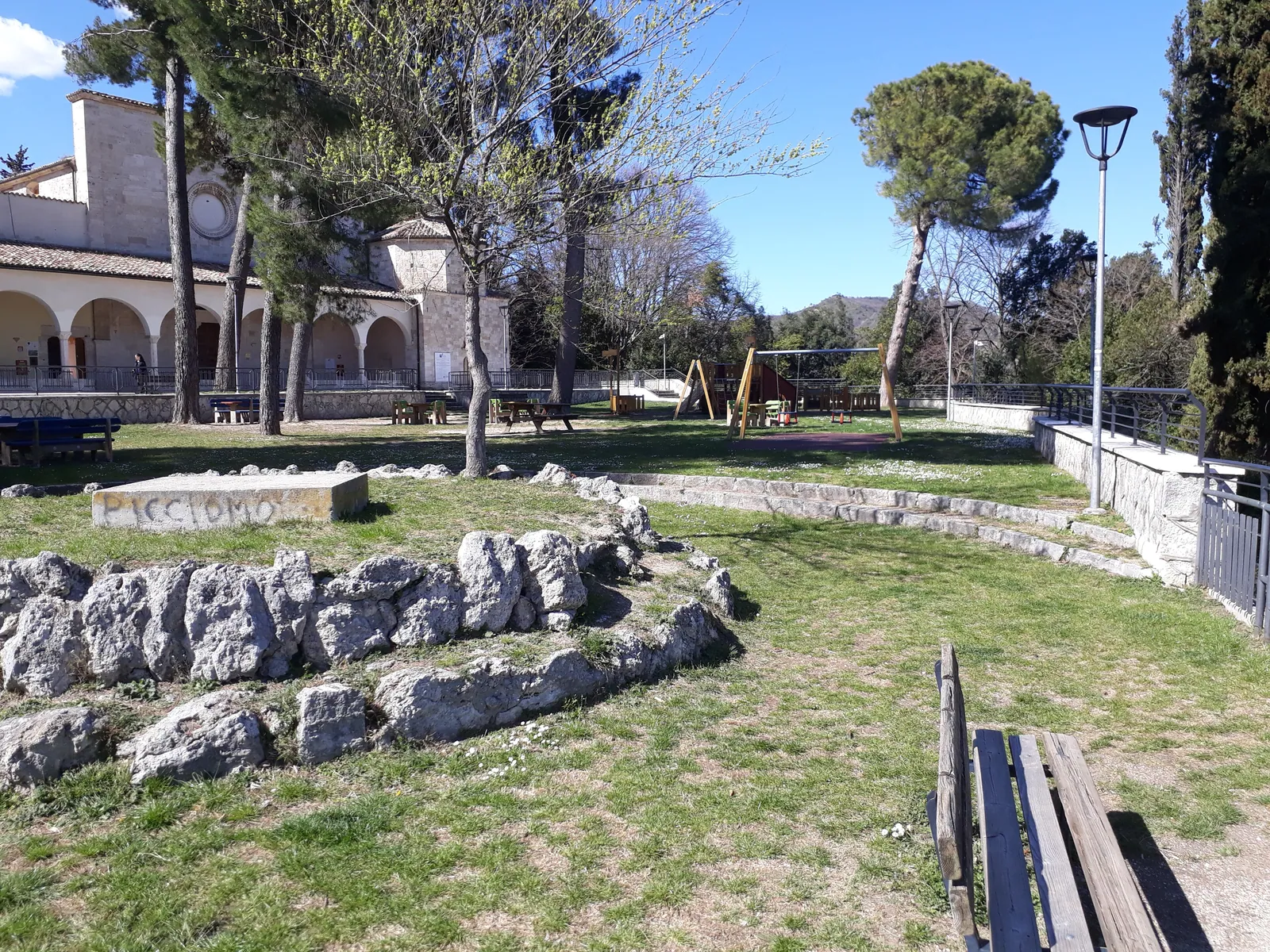
Annunziata Caves
- Type
- Ruins or archaeological site
- Municipality
- Ascoli Piceno (AP)
Source: site database, © OpenStreetMap contributors (ODbL).
The Annunziata Caves (Grotte dell'Annunziata) in Ascoli Piceno are a monumental structure of ancient Roman Asculum, built against Colle dell'Annunziata. Despite the name, they are not natural caves. They are substructures, that is, large niches with barrel vaults built to hold up the ground. They lean against the cliff on three sides and wrap around it entirely on the eastern flank. They rise 18 meters above the ancient ground level.
On the map
Points from the site database. Map © OpenStreetMap contributors · Protomaps.
History of the Annunziata Caves
Current studies date the construction to around the 2nd-1st century BC, between the Republican and Augustan ages. Comparisons with similar structures suggest that the substructures stabilized the ground to support an imposing building, plausibly the Capitolium. At the time the hill was bare of vegetation and the temple was clearly visible from the town below.
Similar substructures are found beneath the cathedral of San Ciriaco in Ancona, in Palestrina and Tivoli, and on the Capitoline Hill in Rome. For centuries the climb from the town to the hilltop followed the path running alongside the caves. Local traditions held that they were part of the Ascoli Acropolis, perhaps the residence of the praetor, or of a fortification system. These theories have no historical basis.
What to see at the Annunziata Caves
The complex is a large portico of vaulted niches parallel to one another. Their plans are rectangular and elongated and follow the irregular line of the cliff. On the southern side, 7 rooms and the retaining walls can be made out. On the eastern side there are 11 chambers, some partly underground. On the northern side, 4 chambers are fully visible.
A feature that may be unique of its kind is the "wedge-shaped" ending of the vaults, which probably served to anchor the structure more firmly to the rocky hill. The substructures are in pozzolanic concrete (emplecton), the walls in opus incertum and the vaults in opus caementicium.
The painter Giulio Gabrielli (1832-1910) portrayed the caves several times. One of his paintings from 1892 is kept at the Civic Art Gallery of Ascoli Piceno, in the Palazzo dell'Arengo.
How to visit the Annunziata Caves
The caves lie along the route that climbs the hill. One town itinerary goes up Via Pretoriana onto Colle dell'Annunziata and reaches the Roman ruins a little below the former convent. Before visiting, it is best to check accessibility and any restrictions.
Where the Annunziata Caves are
The Annunziata Caves are in Ascoli Piceno, on Colle dell'Annunziata, on the eastern side of the cliff. The area is now the Parco dell'Annunziata.
Near the Annunziata Caves
On the same hill stand the former convent of the Annunziata and the Pia Fortress. At the foot of the hill are the ruins of the Roman theater. To continue the visit of the town, the page about things to do in Ascoli Piceno suggests more stops.
Frequently asked questions
Are the Annunziata Caves natural caves?
How high are the Annunziata Caves and how many chambers do they have?
What were the Annunziata Caves for?
Nearby
What to see nearby
- under 100 m
- under 100 m
- Auditorium Mons. Silvano Montevecchi, Ascoli PicenoTheater or auditorium100 m
Where to stay
- 100 m
- 200 m
- 200 m
Where to eat
- Campobase pub in Ascoli PicenoPub and brewery300 m
- Latteria Marini, Ascoli PicenoBar and café300 m
- Pizzeria Stop 'n' Go, Ascoli PicenoFast food and street food300 m
Straight-line distances.