


Church of Sant'Onofrio (Ascoli Piceno)
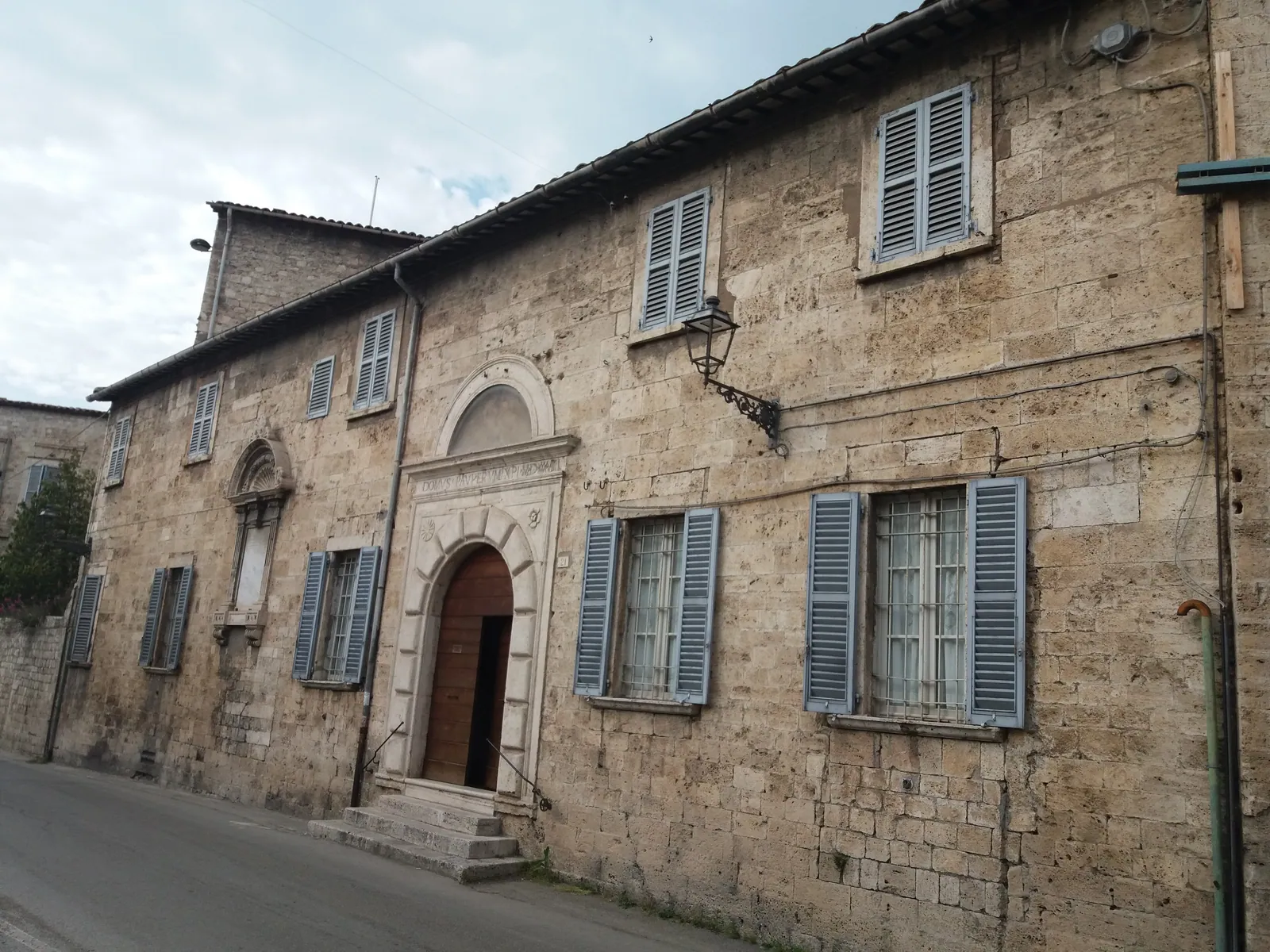
Church of Sant'Onofrio (Ascoli Piceno)
- Type
- Church
- Address
- Via E. TamburiniAscoli Piceno (AP)
- Phone
- 0736259608
- Website
- ascolimedievale.wordpress.com
Source: site database, © OpenStreetMap contributors (ODbL).
The Church of Sant'Onofrio (Chiesa di Sant'Onofrio) in Ascoli Piceno is in the historic center, near piazza Ventidio Basso, and is dedicated to Sant'Onofrio (St. Onuphrius). It was once dedicated to Santa Margherita. It is part of a complex where cloistered Benedictine nuns still live. In the 19th century the complex was used as barracks, and in 1938 the church was returned to its original form.
On the map
Points from the site database. Map © OpenStreetMap contributors · Protomaps.
History of the Church of Sant'Onofrio
The church, once called Santa Margherita, was renovated in 1429 under Bishop Paolo Alberti. It belonged to the municipality, which in 1874 handed it over to the Military District together with the adjoining convent. The whole complex became a barracks.
In 1938, on the initiative of the Benedictine nuns, the church was returned to its original form. On that occasion it received a portal topped by a rectangular window. The restoration of the complex followed a design by the engineer Di Diego.
The monastic community is older. It was founded in the first half of the 13th century and in 1272 adopted the Rule of Saint Benedict, by concession of Pope Gregory X. In 1552 the nuns left their original home, which was in danger of collapsing because of seepage from the Castellano river, and moved to the hospital of Sant'Onofrio, on the corso (main street).
What to see in the Church of Sant'Onofrio
The interior has a single nave and is bare. At the end is the altar, covered by a pedimented baldachin in classical taste. Behind the altar is the nuns' choir. Outside, the 1938 portal with the rectangular window above it stands out.
In 1515 Cola d'Amatrice painted a fresco cycle with Stories of the Passion of Christ in the church. The cycle was completely destroyed in 1874 by vandals from the city, so it can no longer be seen. The adjoining monastery, however, keeps a canvas of the Madonna del Rosario (Madonna of the Rosary) and Saints, painted around 1590 by Simone De Magistris for the Oratorio di San Rocco, which no longer exists.
Visiting the Church of Sant'Onofrio
A community of contemplative, cloistered Benedictine nuns lives in the complex. For this reason it is worth checking opening hours and access to the church in advance.
The monastery also has a vocation for hospitality. The nuns welcome those seeking help or moments of prayer. Spiritual retreats and formation meetings are offered, and the monastery has an outside guesthouse.
Where the Church of Sant'Onofrio is
The church stands in the historic center of Ascoli Piceno, in the Marche region, near piazza Ventidio Basso. Its coordinates are approximately 42°51′27″ N and 13°34′28″ E.
Around the Church of Sant'Onofrio
Piazza Ventidio Basso is the landmark for finding your way around. About 770 m away is the Church of Santi Pietro e Paolo. Among the other churches in the center is the Cathedral of Sant'Emidio. More ideas for a visit are on the page about things to do in Ascoli Piceno.
Frequently asked questions
Can the frescoes by Cola d'Amatrice in the Church of Sant'Onofrio still be seen?
What was the Church of Sant'Onofrio called before?
Do nuns still live in the monastery of Sant'Onofrio?
Does the monastery of Sant'Onofrio offer hospitality or retreats?
Nearby
What to see nearby
- under 100 m
- 100 m
- Noble Family Tower (Ascoli Piceno)Castle or fortress100 m
Where to stay
- Il Casseretto in Ascoli PicenoGuesthouseunder 100 m
- 100 m
- 200 m
Where to eat
- Chisc in Ascoli PicenoRestaurantunder 100 m
- Il Capriccio degli Dei, Ascoli PicenoRestaurantunder 100 m
- Figli di restaurant in Ascoli PicenoRestaurant100 m
Straight-line distances.