


MTB helmet: how to choose and fit it
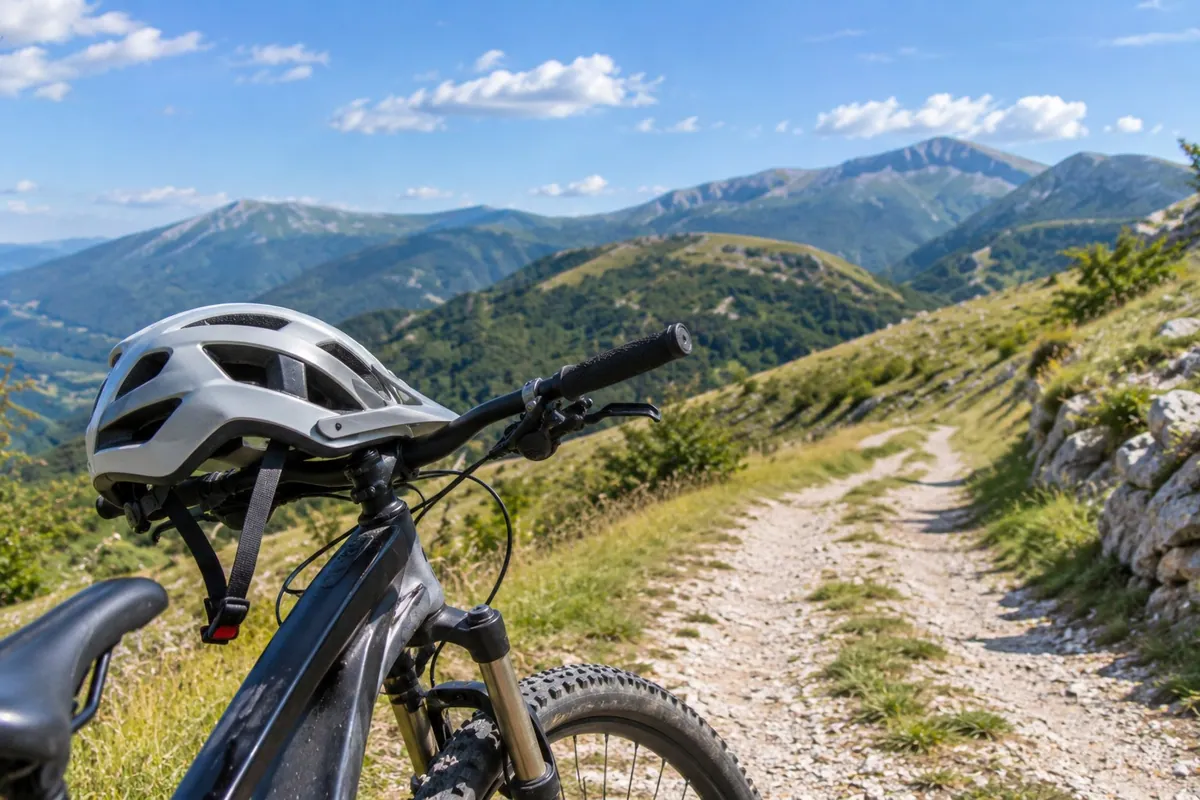
An MTB helmet is chosen according to the type of riding: open, light and ventilated for rides on dirt roads and trails, more protective for enduro, full-face for downhill. Whatever the model, two things come before everything else: EN 1078 certification and a size that fits precisely, because a helmet that moves on the head offers little protection.
In Italy, wearing a helmet on a bicycle is not required by law, either on traditional bikes or on pedal-assist ones, and there is no requirement for minors either (situation as of May 2025). It is always recommended, though: according to the Swiss Council for Accident Prevention, a helmet halves the risk of head injuries in a crash.
MTB helmet: how to choose
A mountain bike helmet differs from a road helmet in a few construction details: it has a visor, which shields from the sun and from debris thrown up by the wheels, fewer vents, a shell that resists mud, sand and dust, and a longer rear section to protect the back of the head. Within this family there are four types.
Open-face helmet for cross country and trail. It is the lightest and has many vents, designed for long races and extended use. It does not cover the lower part of the face.
Enduro helmet. It has a similar shape but covers the temples and the back of the head better. It is heavier and more protective, has a larger visor and room for goggles.
Enduro full-face helmet. It combines the lightness of the open-face helmet with the protection of the full-face, with good ventilation. Some models have a removable chin guard, which comes off for climbs.
Downhill full-face helmet. It offers the highest level of protection and is designed for violent impacts: it is similar to a motorcycle helmet and also protects the face and jaw. It is recommended for the most demanding disciplines, such as downhill and bike parks.
In short: the open-face helmet, lighter and more ventilated, suits less demanding rides; the full-face helmet is recommended for enduro, downhill and bike parks.
MTB helmet: what to look for
Certification. The helmet must carry the CE EN 1078 marking, usually on the label sewn to the strap. It is the standard required for bicycle helmets sold in Europe, and it also applies to skateboarding and skating. Almost all helmets on the market meet it, but it is worth checking. The standard considers only impacts perpendicular to the helmet surface, whereas in most falls the impact is oblique.
Protection from oblique impacts. For this reason many helmets have a system that reduces head rotation. One of these is MIPS, a movable inner layer placed under the shell, which absorbs part of the rotational energy during a fall. The Swiss Council for Accident Prevention recommends always choosing a helmet with a system of this kind.
Construction. A helmet consists of a rigid outer shell, in polycarbonate or another plastic, and an inner shell of expanded polystyrene, which absorbs the impact by deforming. That is why it is built to withstand a single impact: once deformed, it no longer protects.
Size. Measure the head circumference at its widest point, just above the ears, and compare it with the manufacturer's chart: sizes are given as ranges in centimeters and vary from one brand to another. Some helmets have an adjuster that lets them be widened or tightened by three or four centimeters. A helmet that is too big can come off in a fall; one that is too tight is uncomfortable to wear.
Ventilation. Good airflow keeps the head from overheating and lets sweat evaporate. The number of vents matters, but so does the way air circulates inside.
Weight. Open-face helmets range from about 200 grams to almost a kilo; full-face helmets weigh more. More weight usually means more protection, but a helmet that is too heavy tires the neck and shoulders.
Visor and goggles. Riders who use goggles should check that they are compatible with the helmet: on some models the visor is adjustable and leaves room for the top edge of the goggles.
MTB helmet: practical tips
Try it on before buying. The helmet should fit snugly without squeezing or slipping. Once adjusted, it should stay put even when the head is turned sharply or moved forcefully back and forth.
Adjust it in the right order. First tighten the dial at the back until the helmet does not move even with the strap open. The front edge should sit two fingers above the bridge of the nose. The side straps should meet just below the ear. Between the chin strap and the chin there should be room for one or two fingers. The helmet should always be worn buckled.
Replace it after an impact. After a fall in which the helmet hit something, it must be replaced even if it shows no damage: the inner shell may have deformed. The same applies if the inner shell is scratched or punctured.
Respect the lifespan stated by the manufacturer. Even without impacts, materials degrade over time. All parts should be checked regularly and the manufacturer's instructions on lifespan followed; one brand, for example, advises replacing the helmet at least every five years.
Handle it with care. Clean it with soap and water: solvents can damage the shell. It should not be dropped and should be kept away from corrosive liquids.
Do not mount accessories on it. Lights and cameras fixed to the shell are not recommended: to protect, the helmet must be able to slide on the surface it hits.
Choose a visible color. Bright colors and reflective elements help riders be seen in traffic.
For the rest of the equipment, a good starting point is the mountain hiking gear buying guide, with the guides to mountain clothing and hiking GPS and navigation. For where to ride, there is the page on mountain biking in the Sibillini Mountains.