


Papal Paper Mill Museums
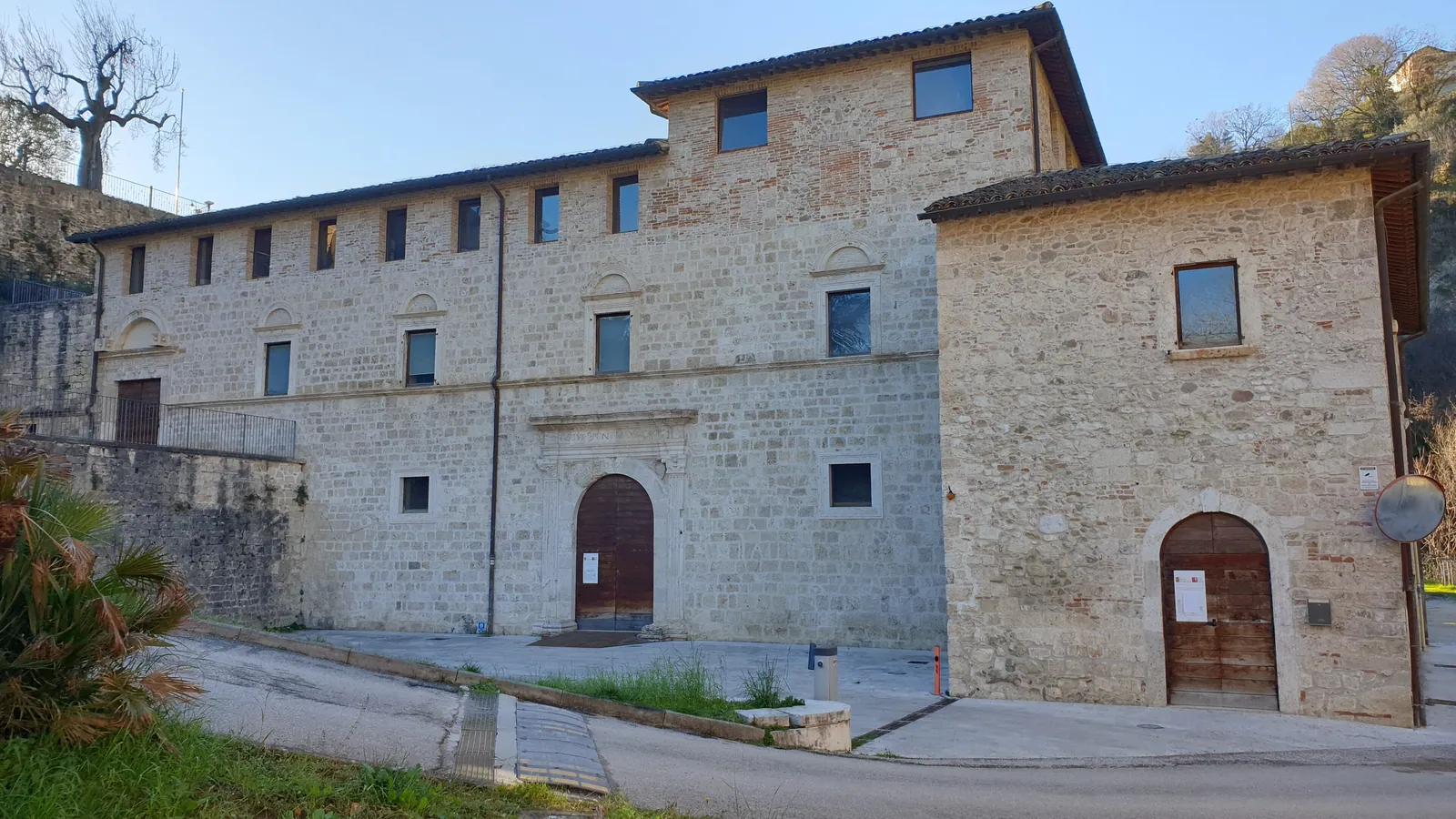
Papal Paper Mill Museums
- Type
- Museum or art gallery
- Address
- Via della CartieraAscoli Piceno (AP)
- Phone
- 0736 252594
- Website
- ascolimusei.it
Source: site database.
The Papal Paper Mill Museums (Musei della Cartiera Papale) in Ascoli Piceno are housed in a large mill built of travertine blocks, commissioned by Pope Julius II della Rovere in 1512 along the Castellano stream. For centuries the complex used water power to grind grain, make paper and process cloth. After decades of neglect, the Province of Ascoli Piceno bought and restored it, and today it is an example of industrial archaeology. The museum complex brings together the Museo della Carta (Paper Museum), the Museo di Storia Naturale "Antonio Orsini" (natural history museum), the exhibition "Tutta l'Acqua del mondo" and the Biblioteca di Storia Contemporanea "Ugo Toria" (contemporary history library).
Before planning a visit, it is worth knowing that the complex cannot currently be visited. The closure is due to upgrading works, after which it is expected to reopen with some new features. As early as 2024 the Province had suspended public opening.
On the map
Points from the site database. Map © OpenStreetMap contributors · Protomaps.
History of the Papal Paper Mill Museums
The origins of the mill date back to the Middle Ages. Notarial documents record grain mills on this bend of the Castellano as early as the 8th century and a small paper mill from the 13th. Paper production is certain from the early 15th century, when papermakers from Fabriano and Pioraco moved to the town and worked alongside Ascoli craftsmen. The complex stood just outside the walls, in an area first called Porta Molinara and then Porta Cartara.
A flood of the stream in 1508 damaged the building, which already belonged to the Camera Apostolica (the papal treasury). In 1511 Julius II entrusted the restoration to the hydraulic engineer Alberto da Piacenza. The following year the work was completed, as recorded by the inscriptions on the travertine portals of the main facade. The pope is said to have expanded the paper mill to meet the growing demand for paper after the invention of movable-type printing. The town had one of the first printing presses in Italy.
After another flood, in 1525 Pope Clement VII commissioned Cola dell'Amatrice to rework the northwest wall. The upper floors date from the 18th century, when ownership passed from the Papal States to the Merli family, whose property was expropriated in the Fascist era. From 1980 the buildings belonged to the Comunità Montana del Tronto and then to the Province, which oversaw their restoration. The first core of the museums opened in November 2006.
What to see at the Papal Paper Mill Museums
The Museo della Carta is the heart of the route. It gathers old tools and reproductions of machinery from various periods, and shows how papermaking changed over time. The Sala Macine holds the remains and reconstructions of the Porta Cartara millstones. The system of channels, basins and sluices is also part of the visit. Water was drawn upstream, passed through the blades of the machines and returned to the stream after powering the mill, paper mill, ironworks and oil press.
On the third floor is the Museo di Storia Naturale "Antonio Orsini", dedicated to the Ascoli pharmacist and naturalist (1788-1870). The collection includes a herbarium of more than 11,500 dried plants, fossil collections, about 1,500 shells, about 1,260 minerals and 2,300 rocks.
The permanent exhibition "Tutta l'Acqua del mondo" (All the Water in the World) is a multimedia, interactive route with touchscreens, videos and three-dimensional maps. It explains the role of water in the development of life and human activity. Since January 2017 the complex has also housed the Biblioteca Provinciale di Storia Contemporanea "Ugo Toria". The rooms have also hosted temporary exhibitions, often devoted to science and technology.
How to visit the Papal Paper Mill Museums
Visits are not possible at the moment. The complex is closed for upgrading works. Before traveling, it is best to check for updates on the reopening.
In the past, opening times varied by season and many visits were by reservation. There were also some special openings for events. Hours and prices, once the complex reopens, should be checked with the operator.
The facilities planned include a ticket office, bookshop, cloakroom, conference room, screening room and a workshop for educational activities.
Where the Papal Paper Mill Museums are
The museums are in Ascoli Piceno, on the right bank of the Castellano stream, in the Porta Cartara area. In the Middle Ages this area lay just outside the town walls. The town stands at an elevation of 154 m, where the Tronto meets the Castellano, and is surrounded by mountains on three sides. The exact address is in the box on this page.
Near the Papal Paper Mill Museums
Ascoli Piceno has a historic center built almost entirely of travertine, the same material as the paper mill. Its focal point is the Renaissance Piazza del Popolo in Ascoli Piceno. In the Middle Ages the town had about two hundred noble towers, and it still keeps several examples today, so much so that it is called the City of a Hundred Towers. To plan the rest of the visit, see the page about things to do in Ascoli Piceno.
The municipality is bordered by two protected areas. To the south is the Gran Sasso and Monti della Laga National Park, to the northwest the national park of the Sibillini Mountains.
Frequently asked questions
Are the Papal Paper Mill Museums in Ascoli Piceno open?
What can you see at the Museo della Carta in Ascoli Piceno?
How did the Cartiera Papale use the water of the stream?
Who was Antonio Orsini, after whom the natural history museum is named?
Nearby
What to see nearby
- 100 m
- Pia FortressCastle or fortress200 m
- 300 m
Where to stay
- Villa Fortezza B&B in Ascoli PicenoB&B or guesthouse200 m
- 300 m
- 400 m
Where to eat
- Macelleria Civilotti, Ascoli PicenoButcher and pork products600 m
- Campobase pub in Ascoli PicenoPub and brewery600 m
- Latteria Marini, Ascoli PicenoBar and café600 m
Straight-line distances.