


Snowshoeing in the Sibillini Mountains and Snowshoe Rental
For snowshoeing in the Sibillini Mountains, renting snowshoes is almost always sorted out at the time of booking. Many guided snowshoe outings already include snowshoes and poles. Those who prefer to go on their own will find rental points next to the ski lifts, at some accommodations and in sporting goods stores. The season runs from December to March, but the snow decides: if there is none, outings are canceled or become ordinary winter hikes on foot.
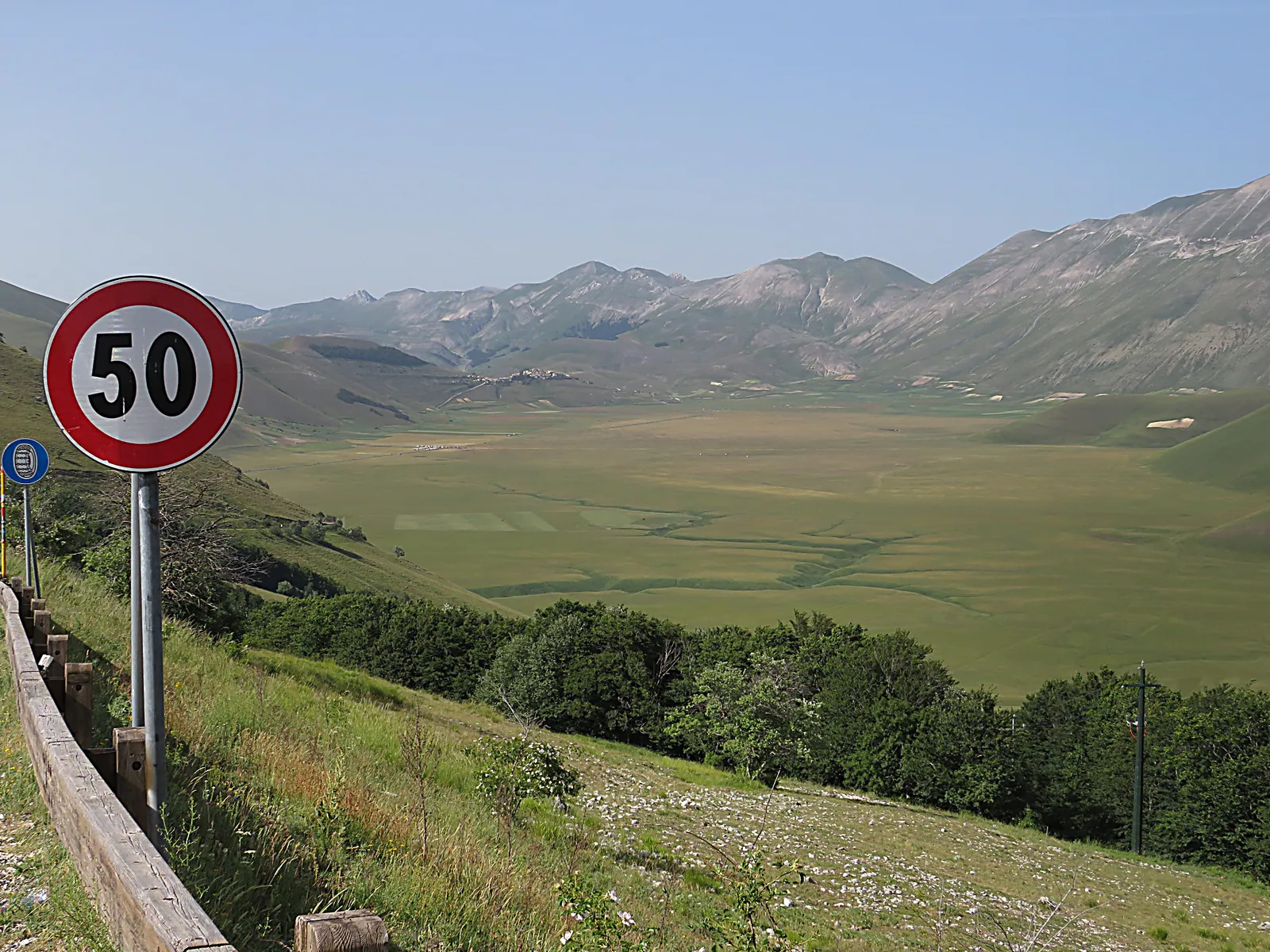
Sibillini National Park was established in 1993, lies between Le Marche and Umbria and covers more than 70,000 hectares. In winter it offers very different routes. At Castelluccio di Norcia the walks look out over the Pian Grande and enter the beech woods of the Val Canatra. From Forca Canapine the trail reaches the frozen ponds of the Pantani di Accumoli, along the old border between the Papal States and the Kingdom of the Two Sicilies. From the Piani di Ragnolo, on clear days, the view reaches the Adriatic Sea and Monte Conero. These routes are generally easy, suitable even for first-time snowshoers.
In this section
1 result
No results with these filters.
Snowshoeing in the Monti Sibillini: what to know
The snowshoe is the modern version of the old snow racket and lets you move over snow without sinking. On the easy routes of the Sibillini no special technique is needed: strap them on and walk. That is why snowshoe outings suit beginners and families too.
Organized snowshoe outings usually follow a similar format. The meeting point is often in Norcia; participants then drive their own cars to the start, and before setting off the guide briefly explains how to use the snowshoes. Groups have a minimum and maximum number of participants. The fee generally includes the nature guide, insurance and equipment. The route can change depending on snow cover, and the exact meeting point is sometimes announced the day before. The guide may postpone, change or cancel the outing if weather or safety conditions require it. Many outings last about three hours, so participants are back for lunch or dinner. Others are longer and take several hours, stops included. To choose a guide, the page guided hikes and guides in the Sibillini Mountains is useful.
Snowshoes can be rented in several ways. At Pintura di Bolognola, rental of snowshoes and poles for adults and children is next to the lift ticket office. Some accommodations rent them to their guests in winter. Several guides have a limited number of pairs, to be requested when booking. Some have sizes for children from 4-6 years old and for kids aged 7 to 12, while from 13-14 years old adult snowshoes are usually used.
Here are the most popular areas, with some route data:
- Castelluccio di Norcia: loops of 4-6 km among the Pian Grande, beech woods and the Val Canatra, with views of the Monte Vettore massif and the Pian Perduto. There are also walks toward the Pian Piccolo.
- Forca Canapine and Pantani di Accumoli: about three and a half hours with 150 m of elevation gain. Along the route, border stones mark the point where Le Marche, Umbria and Lazio meet.
- Piani di Ragnolo: about 7 km with 200 m of elevation gain. The start is from the Baite di Ragnolo, in the municipality of Fiastra, or from the Santa Maria Maddalena pass, at Bolognola.
- Frontignano di Ussita: 4.5 km and 150 m of elevation gain through snowy pine woods up to Monte Torrone, facing Monte Bove.
- Lago di Fiastra: a route with almost no elevation gain, suitable for children and beginners.
- Other areas: Sassotetto, the Piano della Gardosa at Foce di Montemonaco and the loop from Forca di Presta, a mountain pass, to Monte Macchialta, in Arquata del Tronto.
After the 2016 earthquake, the Monte Prata loop at Castelsantangelo sul Nera was reported as not passable.
Snowshoeing in Sibillini National Park: when to go
The right period for snowshoeing in Sibillini National Park runs from December to March, as long as there is snow. Organized outings are concentrated mainly on weekends between mid-December and mid-March. Some guides offer night snowshoe outings on Saturdays and daytime ones on Sundays, back in time for lunch.
Snow is never guaranteed. When it is lacking, many booked outings still take place as winter hikes on foot. So it pays to plan with some flexibility and ask for updates close to the date.
The year-end holidays are a period of high demand. In recent winters guides have offered New Year's snowshoe outings of various kinds:
- sunset outings on the Piani di Ragnolo on January 1;
- evening snowshoe walks at Castelluccio di Norcia followed by the New Year's Eve dinner;
- sunset snowshoe walks at Frontignano with dinner in Ussita;
- multi-day treks between the Pantani di Accumoli, Castelluccio and Monte Bove.
These events usually go ahead only with a minimum number of participants and require advance booking. If there is no snow, they become hikes on foot. Outings after sunset are described on the page night snowshoeing in the Sibillini.
The end of the season also calls for caution. In April 2025 and in spring 2026, after heavy snowfall, avalanche danger in the Sibillini reached level 3 out of 5 ("considerable"). For the Creste del Redentore area, at Castelluccio, it was reported that the heat of the middle hours of the day increases the risk.
Sibillini Mountains snowshoeing: practical tips
Footwear. The most important item is a pair of waterproof hiking boots that fit securely into the snowshoes. Trail running shoes and soft snow boots are not suitable.
Clothing. Dress in layers, with a few essential items:
- thermal base layer, fleece and windbreaker;
- long winter pants and gaiters;
- winter socks and a spare pair;
- gloves (mittens are better) and a hat;
- sunglasses and sunscreen.
Cotton T-shirts against the skin should be avoided. The backpack should hold water, a snack and a change of clothes. For evening outings a headlamp is required.
Car. Many starting points are at altitude: the Rifugio degli Alpini at Forca di Presta, for example, is at about 1,560 meters. For this reason snow tires, or at least chains on board, are mandatory.
Buying snowshoes. Anyone planning to buy snowshoes should choose them based on their own weight plus that of the backpack, on average 5-10 kg, not on height. Plastic snowshoes suit the wet, compact snow typical of the Italian mountains. For easy routes, models with basic crampons are enough, while more technical ones are needed on steep slopes and icy snow. A heel lift is useful on climbs. Poles matter too: telescopic ones with wide baskets are best.
Technique. On flat ground you walk almost normally, alternating each pole with the opposite leg. On steep sections, raise the heel lift and climb in zigzags, avoiding the fall line. On descents the heel lift should be lowered. On fresh snow, descend with your weight slightly back and knees bent; on hard or icy snow, take short, well-planted steps.
Safety. Before setting out, always check the Carabinieri's Meteomont avalanche bulletin. The Alpine and Cave Rescue service of Umbria (Soccorso alpino e speleologico dell'Umbria) recommends a few precautions:
- avoid gullies and routes below rock walls;
- avoid wind-drifted snow deposits;
- do not cross slopes steeper than 30°;
- on exposed routes, carry an ARTVA (avalanche transceiver), shovel and probe.
Not all summer trails are safe in snow, and trail markings can stay hidden under the snowpack. In winter, climbing to the summits requires mountaineering equipment and experience, so anyone going out alone should already have mountain experience. For other snow activities there are the pages on cross-country skiing in the Sibillini and ski touring in the Sibillini; the full range is in things to do in the Sibillini Mountains.