


Monuments of the Sibillini Mountains
The monuments of the Sibillini Mountains tell above all the story of the Middle Ages: town walls with gates and towers, fortresses built by the lords of Camerino, watchtowers over the valleys, fortified residences later turned into villas. Alongside these civil and military works are the great churches, the abbeys, the bridges, the mills and the tower houses of the countryside.
Much of this heritage lies in the area struck by the 2016 earthquake. The symbol of the reconstruction is the Basilica of San Benedetto in Norcia: devastated by the collapse of its bell tower, it reopened on October 30 and 31, 2025. Other monuments may still be closed or under restoration, and before a visit it is always worth checking their status.
The places
4 results
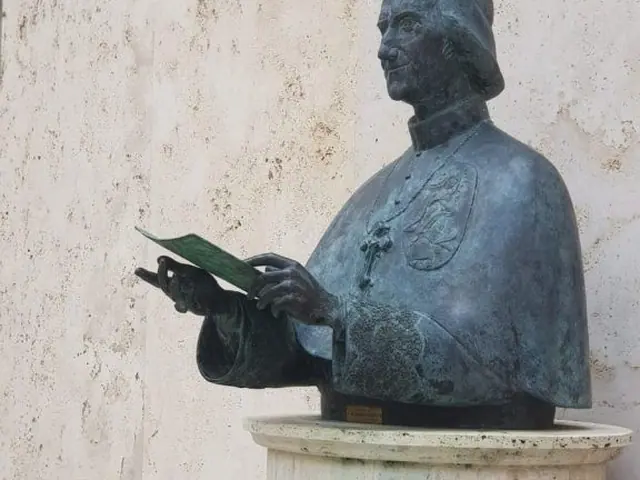 Bust of the Venerable Francesco Antonio MarcucciMonument or memorial · Ascoli Piceno
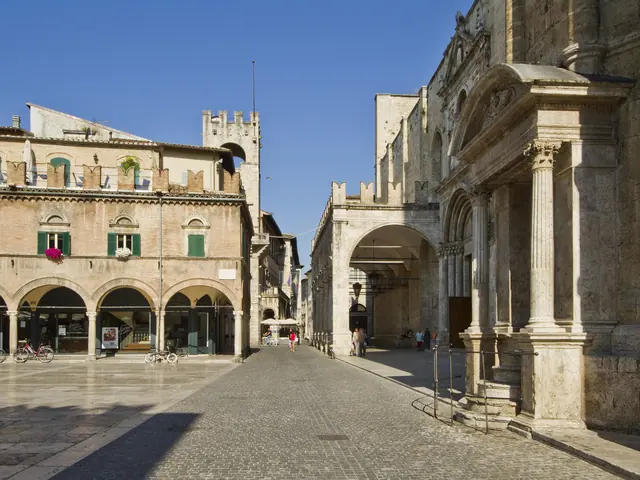 Lazzaro Morelli AediculeWayside shrine · Ascoli Piceno
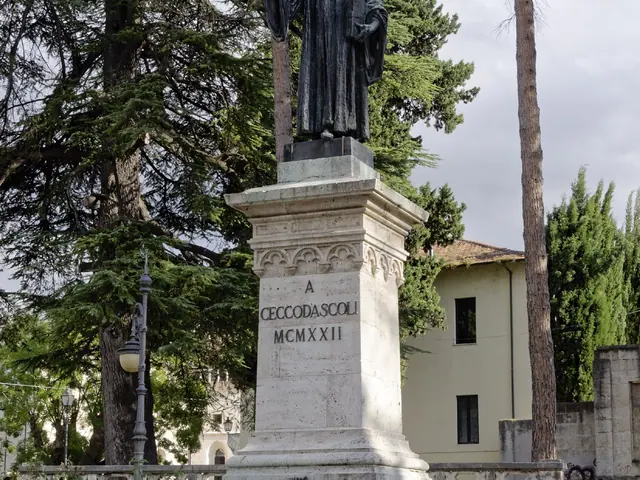 Monument to Cecco d'AscoliMonument or memorial · Ascoli Piceno
- Monument or memorialStatue of Christ the Redeemer (Ascoli Piceno)Monument or memorial · Ascoli Piceno
No results with these filters.
On the map
Points from the site database. Map © OpenStreetMap contributors · Protomaps.
Monuments of the Sibillini Mountains: the map
The monuments are spread across all the municipalities of the Park and the surrounding area, between Le Marche and Umbria, and are grouped by type on dedicated pages, each with its own map:
- Castles in the Sibillini Mountains: fortresses, strongholds and watchtowers, from the Varano castles to the dovecote towers.
- Medieval walls and gates in the Sibillini: the town walls of the historic centers and their gates.
- Palaces and squares in the Sibillini: historic palaces and town squares.
- Churches in the Sibillini Mountains, abbeys and monasteries in the Sibillini and sanctuaries and hermitages in the Sibillini for religious heritage.
- Bridges and mills in the Sibillini, historic theaters in the Sibillini and archaeological sites in the Sibillini for the other types.
Monuments of the Sibillini Mountains not to miss
Norcia. The town is enclosed by a ring of walls about 2 km long, with eight gates and seventeen of the original twenty towers: the layout has ancient origins, but its present form dates from the rebuilding of the 13th century and from work in the 18th and 19th centuries. On the west side of the main square stands the Castellina, a fortified residence built between 1554 and 1564 to a design by Vignola, with a square plan and four corner bastions; the main floor, once the residence of the Prefetto della Montagna (Prefect of the Mountain), houses the Castellina Museum in Norcia. In the hamlet of Ancarano are the ruins of the castle of Castelfranco, built in 1370, with its 14th-century gate topped by a tall tower.
Visso. The town walls, built between 1210 and 1256, had 24 outer walls, four gates and four towers. Porta di Pontelato, from 1283, is the oldest gate in town and was connected by a drawbridge to the bank of the Nera; along the road to Macereto rise two crenellated watchtowers from the 11th-12th century, the taller of them 25 meters high.
Camerino. The Varano Fortress, built at the beginning of the 12th century on a rocky spur between the Chienti valley and the San Luca stream, was among the most important fortifications of the lords of Camerino. In town, the Rocca Borgesca was built by Cesare Borgia in 1503 and, after the demolition of the buildings inside it, became a broad viewpoint with a public garden from 1924, overlooking the Sibillini Mountains.
Valfornace. The Beldiletto Castle, in Pontelatrave, is a fortified residence of the Varano family from the 14th-15th century: the four-sided portico of the inner courtyard, with pointed arches in two-tone stone, is an example of late Gothic architecture, and in 1464 Giulio Cesare Varano turned it into a fortified villa.
Fiastra. Of the Castello dei Magalotti, the Castrum Flastrae on the hill of San Paolo, what remains are the ruins of the walls on three sides, of two towers and of the keep; the Magalotti sold their fortresses to the Comune of Camerino in 1259.
Amandola and Montefortino. In Amandola the Torrione del Podestà, a tower of 14th-century origin, still has the clock moved in the 18th century from the bell tower of San Francesco, and Porta San Giacomo combines a medieval facade with a pointed arch and a Baroque one facing the square. In Montefortino, in the Tre Ponti area, three 16th-century farmhouses rise like towers, with the top floor used as a dovecote; in the village, the Tempietto dell'Orologio, topped by a 15th-century tower, is where the painter Fortunato Duranti died in 1863.
Monuments of the Sibillini Mountains: tips for visiting
Many monuments in the area were damaged by the 2016 earthquake. Before setting out, it is therefore worth checking that the chosen site is accessible, by contacting the Comune (town hall) or the Pro Loco (local tourist association); historical descriptions generally refer to the condition before the earthquake. The overall picture of the reconstruction is told in the 2016 earthquake and the reconstruction in the Sibillini Mountains.
Some buildings are privately owned, such as the tower houses of Montefortino, and should be respected as such. For the ruins of isolated castles, such as those of Fiastra or Castelfranco, it is useful to check the weather before setting out. In the historic centers of Norcia, Visso and Camerino, walls, gates and fortresses can be seen on a single walking visit.