


The Apennine Sibyl (Sibilla Appenninica)
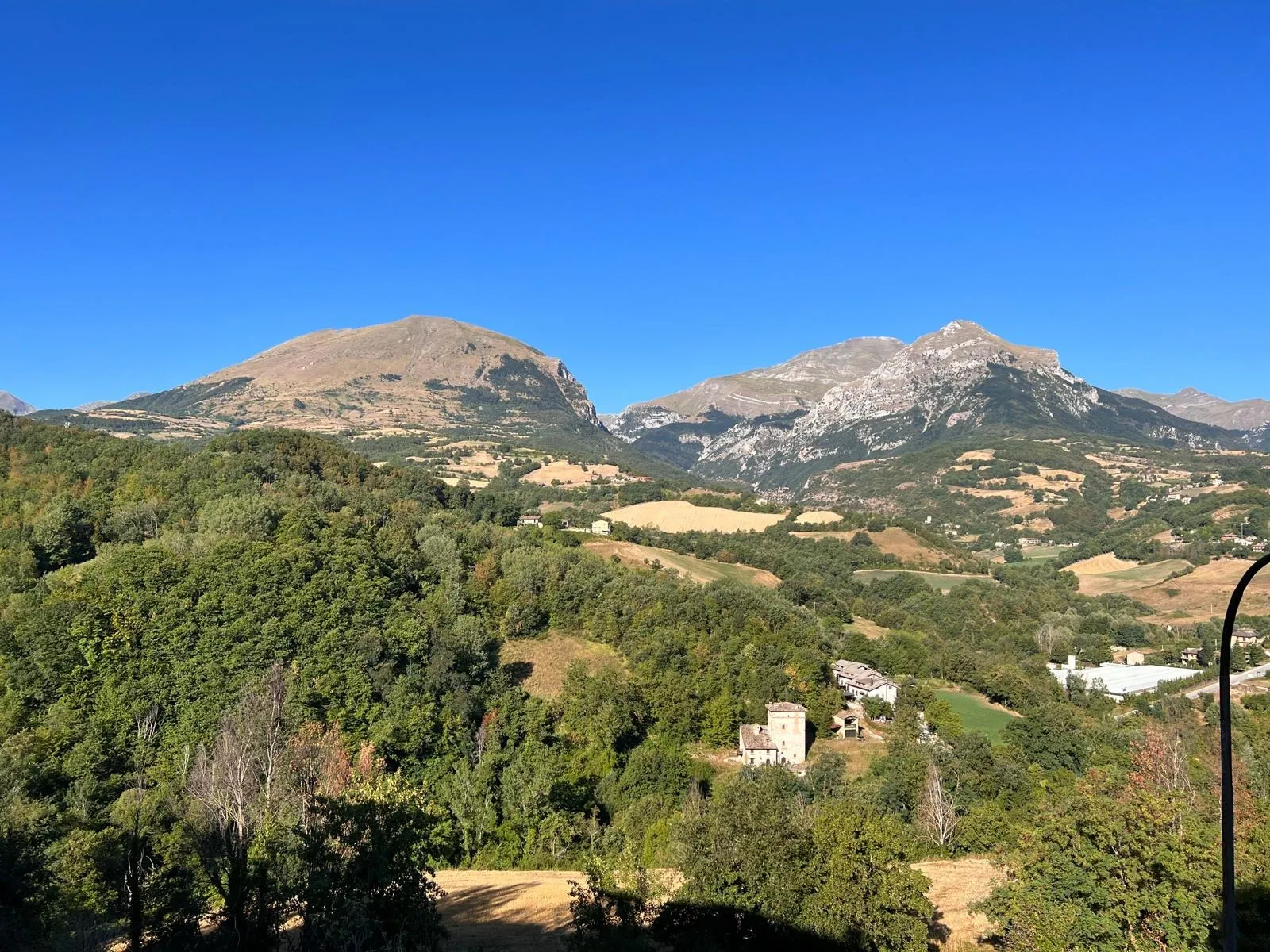
The Apennine Sibyl (Sibilla Appenninica), also called the Sibilla Picena or the Sibyl of Norcia, is the legendary figure who gave her name to the Sibillini Mountains. The myth spread from the Middle Ages in the mountain area of the Piceno and Norcia. In the tales the Sibyl is a sorceress, enchantress and seer, queen of a paradisiacal underground world. It was said to be entered through a cave on the summit of Monte Sibilla.
The Sibyl's cave lies at about 2,150 m, just below the summit of Monte Sibilla, in the municipality of Montemonaco, and can only be reached on foot. Today it is blocked by fallen boulders, so it cannot be entered. What remains is the hike along the ridge of Monte Sibilla and the museum devoted to the myth in Montemonaco. The museum, however, is currently closed for restoration.
The Apennine Sibyl: what to know
In medieval texts only the names "Sibilla" and "Regina Sibilla" (Queen Sibyl) appear, with her home placed in the mountains between Norcia and Montemonaco. The term "Sibilla Appennina" appears for the first time in 1938, in Augusto Vittori's book Montemonaco nel Regno della Sibilla Appennina, with a preface by Fernand Desonay. The figure is not one of the ten classical Sibyls listed by Varro. Her identification as a sibyl is probably due to processes of cultural and literary syncretism.
The first written sources date back to the late Middle Ages. Two 15th-century works fixed the figure as she is known today: Il Paradiso della Regina Sibilla (The Paradise of Queen Sibyl) by Antoine de La Sale, from 1420, and Il Guerin Meschino by Andrea da Barberino, written around 1410 and printed only in 1473. Both put into writing tales from the local oral tradition, whose origins are unknown: from the 1st century to the Middle Ages there are no historical sources or archaeological references.
Antoine de La Sale, a French gentleman, made the journey in the spring of 1420 and visited Montemonaco and the cave. He wrote the report for Duchess Agnes of Burgundy. He described the first accessible part of the cavity, which he probably explored in person. At the entrance a narrow opening, partly blocked by a rock, leads to a first square chamber with seats carved into the wall. From there the way continues only through narrow, steep tunnels, which discouraged the author. In the first chamber he also reports the signatures of European knights, a sign of a flow of visitors already in the Middle Ages. The rest is what the people of Montemonaco told him. The tunnels descend for about three miles, then a violent wind drives back even the boldest. One reaches a chasm with a roaring river, to be crossed on a very long bridge as wide as a foot, which widens as soon as one steps on it. Farther on are two statues of dragons with flaming eyes and two metal doors that slam against each other. Finally a shining door opens onto the Sibyl's kingdom, peopled by damsels and young men.
According to these tales, those who live in the cave learn all the languages of the world and remain immortal. They can leave only after the eighth, the thirtieth or the three hundred thirtieth day. Anyone who stays a year can never return to the world. Every Friday at midnight the inhabitants turn into snakes, until midnight on Saturday. A German knight, realizing he was living in a demonic paradise, left before the year was up and went to Rome to ask the Pope for absolution. He did not obtain it right away and returned to the cave forever. The story is covered in depth on the page on Antoine de La Sale and the Paradise of Queen Sibyl.
The Guerin Meschino, by contrast, is a chivalric romance set in the year 824. Its hero Guerino, a knight at the court of Constantinople, is called "meschino" (wretched) because he does not know his parents. From Norcia he climbs to the cave to ask the seer their names. The Sibyl holds him back and tries to make him renounce God. Guerino resists thanks to his faith and after a year leaves the cave without having obtained an answer. In Rome the Pope absolves him and sends him to do penance along the Camino de Santiago de Compostela. Guerino will discover his identity in Ireland, at Saint Patrick's Purgatory. In later editions, subject to the censorship of the Inquisition, several chapters were cut and the name Sibilla was replaced with Alcina, the sorceress of the Orlando Furioso. The reason is that in the 14th-15th century the sibyl was by then a prophetess of the birth of the Messiah in Christian culture and could not have the demonic role given to her by the romance and the folk legends. The character has a page of his own: the Guerin Meschino legend.
Other texts confirm the mountain's fame. Between 1444 and 1450 Felix Hemmerlin writes of the "mountain of the Sibyl", located between Norcia and Montefortino. He tells of a certain Simplicianus who is said to have entered it with two companions, and describes the hailstorms and tempests the mountain would unleash whenever someone approached.
The oral tradition survived into the 20th century. The Sibyl's damsels are identified in folklore as fairies. Their tales were collected by many authors among the elderly of Montegallo, Montemonaco, Montefortino, Castelsantangelo sul Nera and Norcia. More material can be found on the pages on the fairies and necromancers of Sibillini legend and Legends of the Sibillini Mountains. Another story of the mountains is told in the Lago di Pilato legend.
A local version of the legend explains why the Sibyl lives in the mountain. She was condemned by God to remain there until the Last Judgment, for having rebelled in her wish to become the mother of Christ.
The cave as it was and as it is. Before the most recent collapses, the cave had an inner room with a square plan, 4 m high, reached through a small opening or a tunnel. The entrance finally collapsed in the mid-20th century after explosives were used to open it further. Internal landslides linked to the earthquake of 1328 are also recorded. It is also said that the people and authorities of Montemonaco were excommunicated and then absolved in a trial for helping foreign knights reach the cave.
The museum. The Museo della Grotta della Sibilla is housed in Villa Curi, in the center of Montemonaco. Its sections trace the history of the cave with period photographs and accounts. It is currently closed for restoration. Before going, check whether it has reopened.
The Apennine Sibyl: the Sibyl's places today
For climbing Monte Sibilla, the best period runs from summer to fall. These are the months when the trail and the ridge are most passable.
In winter access is more difficult. The road to the mountain hut crosses an avalanche-prone area and may not be passable in this season. Even in summer the weather should be checked before setting out. It can change very quickly even if it looks fine lower down. It is best to start early to have a margin for the return.
Those who want to seek out the Sibyl without walking at altitude can focus on the cultural side. There is the museum in Montemonaco, currently closed for restoration, and the texts of Antoine de La Sale and the Guerin Meschino. These texts can be read in any season.
The Apennine Sibyl: practical tips
The base for visiting the places of the Sibyl is Montemonaco, in Le Marche. The trail starts from the Rifugio Sibilla (a mountain hut), at about 1,540 m. From Montemonaco, take the paved road to Isola San Biagio and after 2 km turn left onto the gravel road that climbs the mountain. In summer, traffic on the road may be restricted, and a shuttle bus runs from Montemonaco to the hut. The transfer takes about 30 minutes. During restricted periods, access is allowed only to vehicles authorized by the Comune (town hall). Anyone planning to drive up should first check the municipal ordinances.
After the 2016 earthquake the hut stayed closed for a long time. Montemonaco is the last place to buy water and supplies for the day. Recommended gear includes hiking boots, a windbreaker, water and food.
The route. From the hut, climb a grassy little valley to the ridge, at 1,970 m. Follow the ridge to the Corona, a small rock step. This leads to the terrace with the blocked cave and, after a last uphill stretch, to the summit, at 2,173 m. In the Corona there is a short section fitted with a chain. The loop is about 12 km long, starting and ending at the hut. The return to the hut is on CAI trail 156, along the west ridge. The elevation gain is about 710 m and the loop takes between 4 and 5 hours of walking.
Difficulty. The route has an EE grade, for expert hikers. It is not suitable for anyone who suffers from vertigo or is new to the mountains. Good fitness and the ability to walk on narrow paths, gravel and grass are needed.
The view. From the summit you can see the Sibillini, the Gola dell'Infernaccio, a gorge, and the surrounding countryside. Below the summit lies the small village of Foce. The route offers views of the sea and, to the south, of the Gran Sasso, the Monti della Laga and the Vettore. The Gole dell'Infernaccio and Monte Priora bear the marks of landslides caused by the earthquake.