


Legends of the Sibillini Mountains
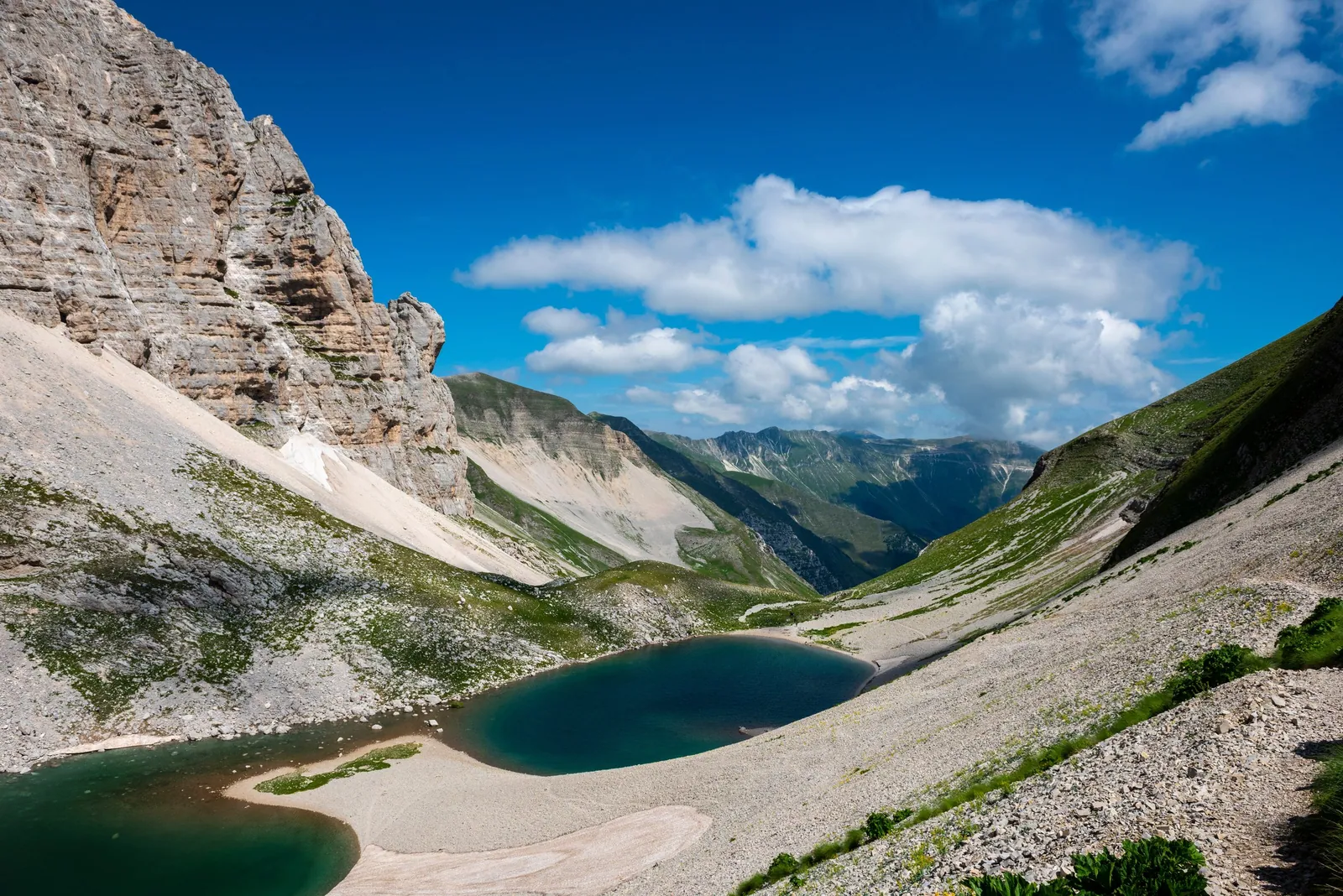
The legends of the Sibillini Mountains revolve around two places. The first is the grotta della Sibilla (the Sibyl's cave), just below the summit of Monte Sibilla (2,173 m), above Montemonaco. The second is Lago di Pilato, below Monte Vettore. According to popular tradition, the Sibyl is a sorceress, enchantress and seer, queen of a paradisiacal underground world that was entered through the cave. Monte Sibilla is not the highest peak in the range, but it gave its name to the whole ridge.
Lago di Pilato, on the other hand, is tied to another story. Its name comes from the legend that the body of Pontius Pilate, sentenced to death by Tiberius, was left in its waters. Around these two stories grew tales of knights, fairies and necromancers. Some of them found their way into 15th-century texts that can still be read today.
In this section
5 results
- Antoine de La Sale and the Paradise of Queen SibylGuide
- Fairies and Necromancers of the SibilliniGuide
 The Guerin Meschino legendGuide
 The Lago di Pilato legendGuide
 The Apennine Sibyl (Sibilla Appenninica)Guide
No results with these filters.
Legends of the Sibillini Mountains: what to know
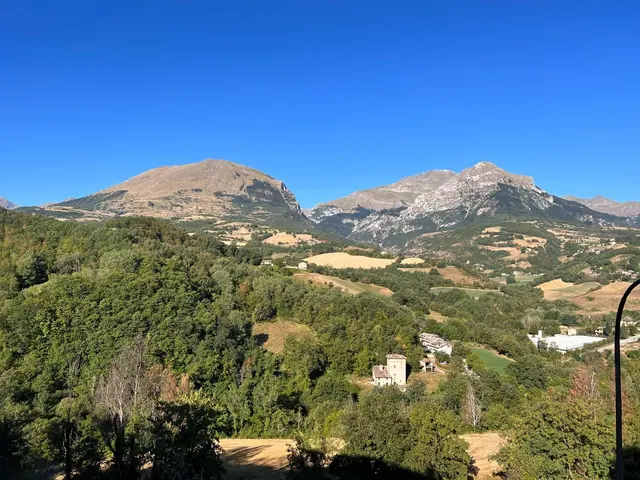
The Apennine Sibyl. The Apennine Sibyl is also known as the Sibilla Picena or the Sibyl of Norcia and has been part of the popular imagination since the Middle Ages. There is no trace of her in the classical tradition: she appears almost suddenly in the medieval period, precisely in this area. The first written sources date back to the late Middle Ages. In the Middle Ages the Sibillini were the destination of pilgrimages by saints and adventurers, necromancers and knights, who made their way to her cave.
The cave, also called the grotta delle fate (fairies' cave), lies at about 2,150 m, near the summit of Monte Sibilla. Its vestibule finally collapsed between 1953 and 1968: today it cannot be entered, and only the site of the entrance can be reached on foot.
The fairies. In the local tradition of Montemonaco, the Sibyl was a good fairy whose handmaidens came down to the valley to teach spinning and weaving or to dance with the local young people during festivals. More tales about fairies and necromancers are collected on the page on the fairies and necromancers of the Sibillini legend.
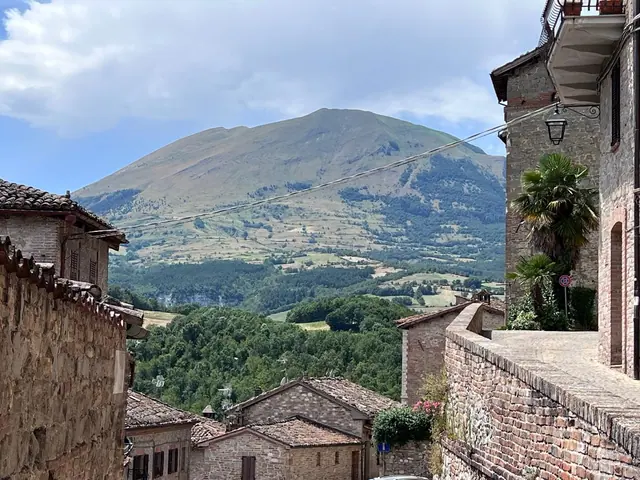
Guerin Meschino. The chivalric romance Guerin Meschino was written around 1410 by Andrea da Barberino. The story is set in the year 824. Guerino is a knight of the court of Constantinople, called "meschino" (wretched) because he does not know who his parents are, and he travels across Europe in search of his origins. In Norcia he sets off for the grotta della Sibilla to ask her the names of his parents.
In the tale three maidens welcome the knight at the cave and lead him to the Sibyl. The Sibyl tries to lead him into sin, but he resists every temptation. The underground world is not entirely idyllic: every Friday at midnight its inhabitants turn into snakes and other monstrous creatures, and they return to normal at midnight on Saturday. After almost a year Guerino leaves the cave and goes to Rome to ask the Pope for forgiveness. Reading the romance was very widespread among the shepherds of this area.
Antoine de La Sale. The French traveler's account is a travel diary. Antoine de La Sale and the Paradise of the Sibyl Queen tells how he visited the cave in May 1420 and left a detailed description of the places and of the cave's vestibule. The text is dedicated to Duchess Agnes of Burgundy. Antoine describes the route to the Sibyl's mountain in precise detail. From the fortress of Montemonaco to the cave entrance he gives a distance of nine miles. For part of the way he rode on horseback, accompanied by Giovanni Sora, a doctor from Montemonaco.
The diary also tells the story of a German knight and his squire. They were welcomed at the Sibyl's court and stayed almost a year amid refined pleasures, then discovered animal transformations, the work of the devil, and decided to leave. In Rome the Pope would not absolve them right away. Antoine's diary and Andrea da Barberino's romance are the two texts that shaped the figure of the Sibyl as she is known today. According to many philologists, the legend of the Sibyl was the main source of the German legend of Tannhäuser, which has many similarities with Guerino's story.
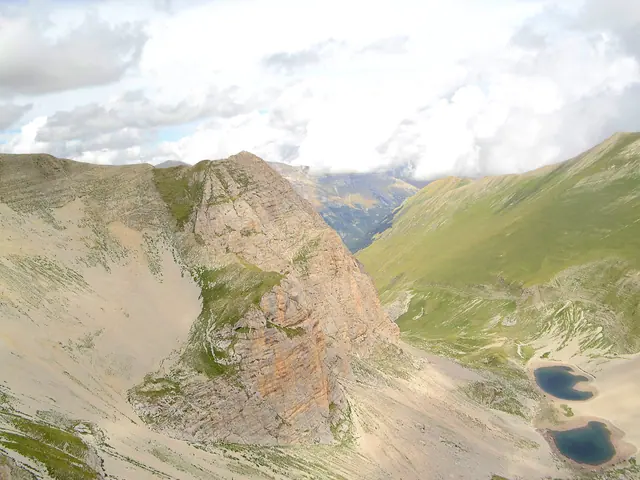
Lago di Pilato. The lake lies on Monte Vettore, in the Sibillini National Park in the Sibillini Mountains, at 1,941 m. It belongs to the municipality of Montemonaco, is called "il lago con gli occhiali" (the lake with glasses) because of the shape of its two connected basins, and is the only natural lake in Le Marche. There are different versions of Pilate's death. In one, his body was sewn into a sack and entrusted to a cart pulled by buffaloes left free to wander. In another, Pilate asked as his last wish that his body be placed on an ox cart, which dragged it up to the summit of the Vettore.
The place had a sinister reputation. From the 13th century the lake was considered a haunt of witches and necromancers. Access was forbidden for a long time, and dry-stone walls were built around the basin. Another tradition identifies it with Lake Avernus, an entrance to the Underworld. The full story is on the page on the Lago di Pilato legend.
Legends of the Sibillini Mountains: the places of the legends today
The legends can be explored at any time of year, because they live on in the tales and in the texts that recorded them. To see the places, however, the season matters. Lago di Pilato and the grotta della Sibilla can only be reached on foot: the lake lies among rugged rock walls and can only be reached on a hike. As for the cave, whose entrance has collapsed, only access on foot to the site remains.
The look of the lake also changes: when there is plenty of water, it forms connected pools shaped like a pair of glasses. Before setting out it is worth checking the weather and trail conditions.
Legends of the Sibillini Mountains: practical tips
Follow in Guerino's footsteps. The Park route "Sui passi del Guerrin Meschino" (In the steps of Guerrin Meschino) is 13,700 m long, takes about 4 hours and 40 minutes one way and has an EE difficulty grade, meaning for expert hikers. It starts from Castelluccio (Capanna Ghezzi), passes Colle Abieri and Palazzo Borghese and ends in Foce. It follows part of the route Guerino is said to have taken from Norcia to Monte Sibilla.
Reaching Lago di Pilato. One option is to start from the Marche side, at Forca di Presta, a mountain pass in the municipality of Arquata del Tronto. From there, follow the route toward the summit of Monte Vettore. Past the Rifugio Tito Zilioli (a mountain hut), descend on the left toward the lake valley.
Respect the lake. At Lago di Pilato swimming is forbidden, as is going closer to the shores beyond the maximum water level line. The lake is home to the chirocefalo del Marchesoni (Marchesoni's fairy shrimp), a tiny reddish crustacean that lives only here. Anyone walking around the lake must keep as far from the water as possible so as not to crush the fairy shrimp's eggs.
Start from Montemonaco. Montemonaco is the reference point for the cave: in Antoine's diary the path starts from the village castle. Before climbing to the cave it is worth asking about access conditions, because the 2016 earthquake left its mark on the area (see Sibillini Mountains history, art and legends for the overall picture).