


Montemonaco: what to see and do
Montemonaco is a municipality in the province of Ascoli Piceno, in Le Marche, standing at 988 meters on a gentle ridge-top plateau in the upper Aso valley, facing Monte Zampa and Monte Sibilla. By altitude it is the second-highest municipality in Le Marche. Most of its territory lies within Sibillini National Park in the Sibillini Mountains and stretches from the peaks of the Vettore massif, which encloses Lago di Pilato, to the Argentella, Pizzo del Diavolo, Palazzo Borghese and Monte Porche, which mark the border with Norcia and Umbria. The landscape alternates ridges, narrow deep gorges, stony slopes and wooded hillsides.
The first historical research, carried out by Augusto Vittori in the first half of the 20th century, traces the name to a group of Benedictine monks who settled here as early as the 8th century. In the 13th century Montemonaco became a free commune and surrounded itself with high stone walls and towers. The village is also known beyond the Apennines for the legend of the Apennine Sibyl and her cave. On May 28, 1420, the French squire Antoine de La Sale came here to hear the residents' tales about Queen Sibyl. A parchment from 1452, on the other hand, records the absolution from excommunication of the entire community, accused of having guided some knights who practiced alchemy to the Sibyl's lake, today's Lago di Pilato. Montemonaco is also one of the villages hardest hit by the 2016-2017 earthquake, and reconstruction still affects several places of interest.
At a glance
- Municipality
- Montemonaco
- Province
- Ascoli Piceno
- Region
- Le Marche
On the map
Points from the site database. Map © OpenStreetMap contributors · Protomaps.
What to see in Montemonaco
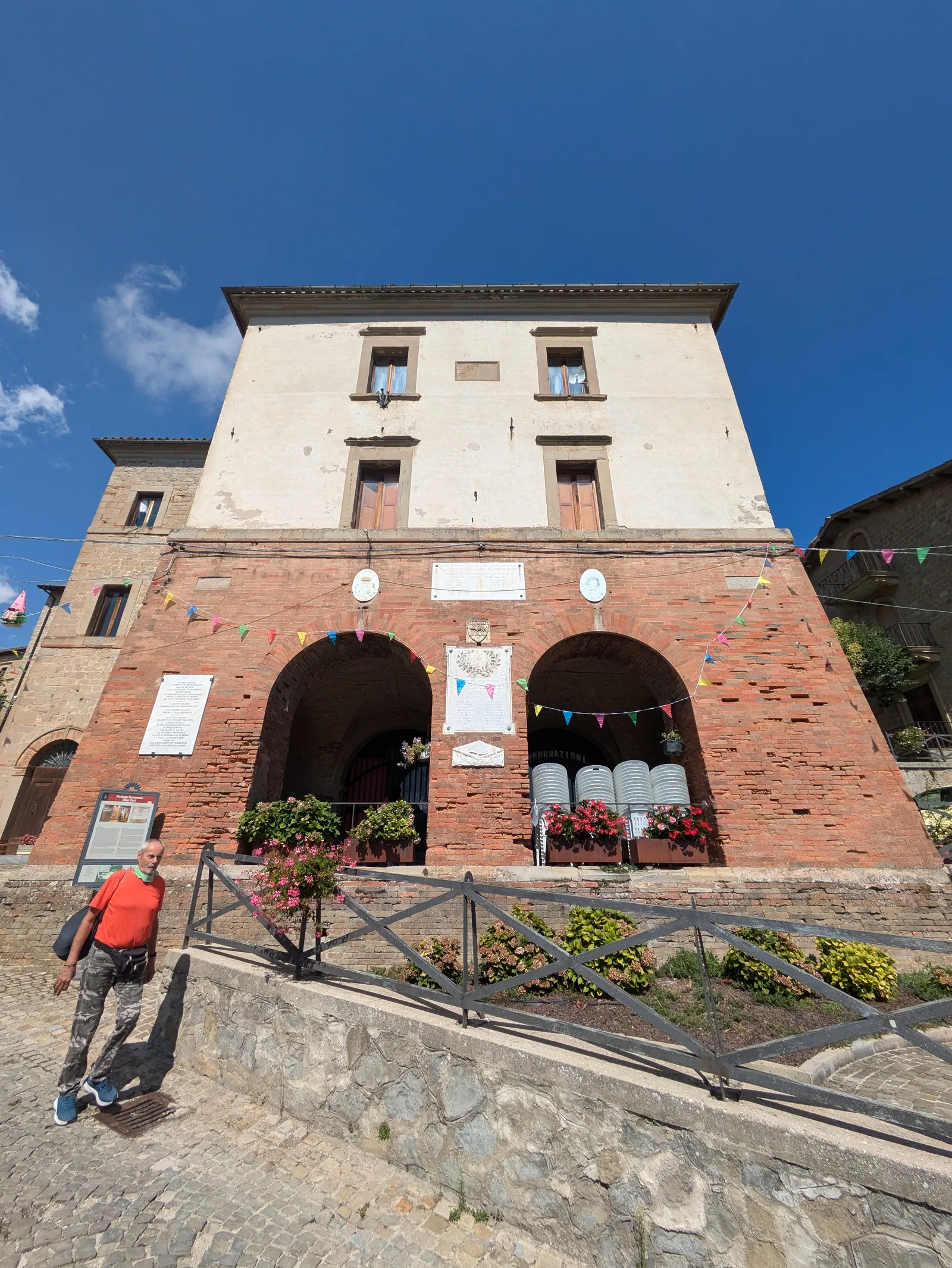
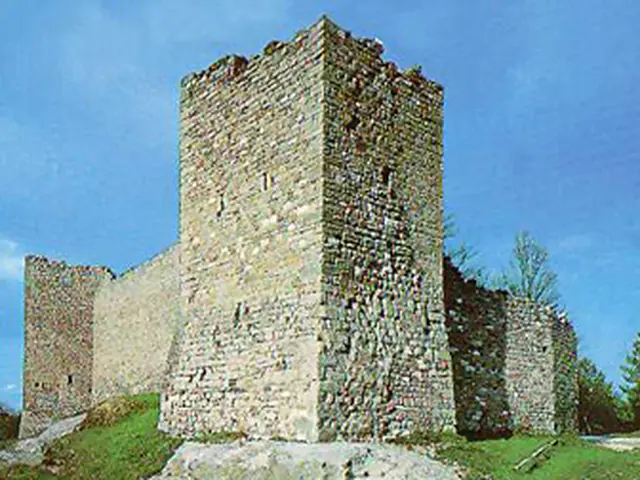
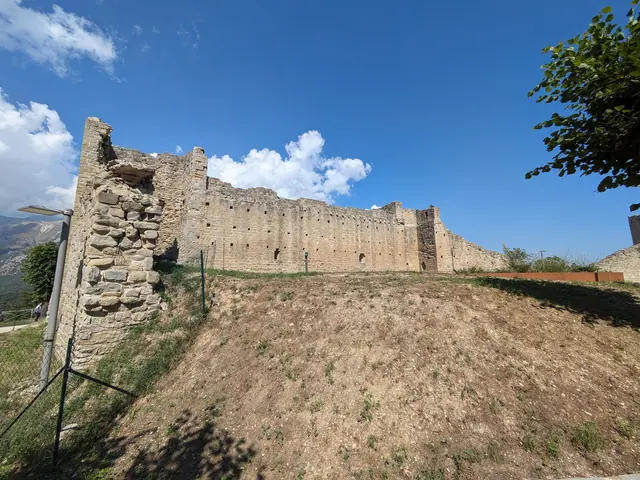
The oldest parts of Montemonaco's historic center are long stretches of the castle and the town walls with towers, dating from the 13th century. The town hall is more recent: Cardinal Farnese had it built in 1549, while its civic tower is older.
In the upper part of the village stands the church of San Benedetto Abate, the largest in Montemonaco. The 2016 earthquake had made it unsafe; it reopened in April 2019 after renovation work. Inside are valuable paintings and works, including a fresco of the Crucifixion from the school of Crivelli. Next to the church, in 2007 the Museo di Arte Sacra (museum of sacred art) was set up in the former church of San Biagio, a Romanesque building. The restoration recovered two 16th-century stone altars. Among the paintings are the Madonna del Soccorso (1521) by Giulio Vergari, a late 16th-century Madonna del Rosario and an altarpiece with San Biagio and Sant'Antonio Abate attributed to Pier Leone Ghezzi.
The Sibyl's Cave Museum is in Villa Curi, in the historic center. It collects historical, artistic and literary material related to the legend, including old books and parchments. The museum is currently closed for restoration: in January 2025 a one-million-euro project was approved for the seismic upgrading of the building.
The Romanesque church of San Giorgio all'Isola is in the hamlet of the same name, about 6 km from the main village, in a large green area near the artificial Lago di Gerosa. In the apse there are Byzantine-style 12th-century frescoes depicting the Deesis, an iconography of Eastern origin. The 2016 earthquake damaged the church. In summer 2025 the start of repair, conservation and seismic upgrading work was announced.
The Grotta della Sibilla (Sibyl's Cave) is at about 2,150 meters, just below the summit of Monte Sibilla. Legend says a prophetess lived there, condemned to dwell in the depths of the mountain until the Last Judgment. After collapses the cave is in ruins and cannot be entered, but the entrance is still visible. The full list of sights is on the page things to do in Montemonaco.
Nature and trails near Montemonaco
The two classic hikes in the Montemonaco area are the climb to Lago di Pilato from Foce and the Monte Sibilla loop, which passes the cave.
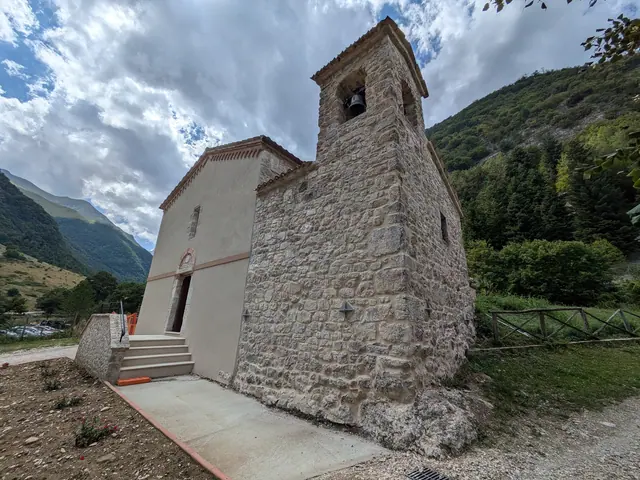
Lago di Pilato is at 1,941 meters and is the only natural lake in Le Marche. It fills a U-shaped glacial valley, closed to the east by Monte Vettore and to the west by Cima del Redentore. The trail starts from Foce (Montemonaco), a small settlement reached by descending from Montemonaco into the Aso valley and then turning toward the mountains. Cars are left at the edge of the settlement or farther on, on the dirt track of the Piano della Gardosa. The elevation gain is about 1,000 meters. It takes about 2 and a half to 3 hours up and about 2 and a half hours down, on the same route. The difficulty is moderate, because of the length, the elevation gain and the section called Le Svolte (the switchbacks): here the trail climbs steep and loose from the beech wood toward the Valle del Lago. Hiking boots and a supply of water are required. The best period runs from late spring to summer, because the lake area remains snow-covered for much of the year.
The lake is home to the Chirocefalo del Marchesoni (Marchesoni's fairy shrimp), a tiny crustacean found nowhere else. To protect its eggs it is forbidden to approach the shores beyond the lake's maximum water line, to touch the water or to let dogs in. When the basin is dry, walking on the lakebed is not allowed. The crustacean can only be observed from the side below Cima del Redentore. In summer the visitor center "Il chirocefalo e la Valle del Lago di Pilato" is open in Foce, organizing hikes with the Park Guides.
The Monte Sibilla loop starts from the Rifugio Sibilla, at 1,540 meters. To get there, drive from Montemonaco toward Isola San Biagio and then take a dirt road, usually opened at the start of summer. In summer a shuttle connects Montemonaco with the refuge. In 2026 the shuttle runs from May 30 to October 18 on Saturdays, Sundays, public holidays and the days before holidays, and every day from August 1 to 23; on service days a municipal ordinance closes the road to unauthorized cars. Road conditions should be checked with the Comune. In 2024 the refuge was closed because of the earthquake. The route is graded EE (for experienced hikers), is 11.8 km long and takes just over 4 hours. Follow trail 155 to Monte Zampa (1,791 meters), then continue along the ridge to the Corona, a rock band fitted with chains. The route then passes the Grotta della Sibilla and reaches the summit of Monte Sibilla (2,173 meters). The descent follows trail 156. On very windy days great care is needed, because the trail is narrow on the ridge.
Other hiking destinations in the area are the Gole dell'Infernaccio, the church of Santa Maria in Pantano, Monte Bellavista and Palazzo Borghese.
Where to stay in Montemonaco
From the main village it is easy to reach Foce, the starting point for Lago di Pilato, and the road to the Rifugio Sibilla. The climb to the lake takes about 2 and a half to 3 hours, plus about 2 and a half hours for the return, so staying in the area allows an early start. The list of places to stay is on the page Montemonaco hotels and lodging. For alternatives nearby, the other towns of the park are on the page villages of the Sibillini Mountains.
Where to eat in Montemonaco
The most characteristic time to taste local cooking is the chestnut festival, at the end of October. On this occasion the women of the village prepare chestnut desserts from traditional recipes in the historic center. At the 2022 edition, the kitchen set up for the festival also served Patasibilla gnocchi. Restaurants and trattorias are listed on the page where to eat in Montemonaco.
Local food in Montemonaco
Montemonaco's signature product is the marroni chestnut, which grows without fertilizers in the area's centuries-old chestnut groves. They have a pronounced aroma, a sweet taste and firm but not woody flesh, and they peel easily. They should not be confused with the very large-fruited varieties, born from crosses between the European and Japanese chestnut.
Every year, on the last weekend of October, the Pro Loco organizes the Sagra Mercato della Castagna (chestnut festival and market) in the historic center. The stalls offer roasted chestnuts, mulled wine and chestnut desserts such as castagnaccio, tronchetto, fried ravioli and skewers. At the market, local producers sell fresh marroni, truffles, potatoes, honey, walnuts, hazelnuts and apples. Recent editions have also featured flours, preserves and a craft chestnut beer.
The Sibillini lands are still rich in medicinal plants today. In past centuries elderly women, called "vergare" in the Piceno area, gathered roots, flowers and herbs to prepare decoctions, infusions and ointments, including for alchemist apothecaries. These apothecaries were still working in Montemonaco in the 18th century.
Weather and how to get to Montemonaco
Montemonaco is reached by car from Ascoli Piceno, about 35 km away by road. Take the SP 235 toward the SS 4 and then the SP 237, through Roccafluvione and Ropaga. Those coming from the north or south take the A14 highway following signs for San Benedetto del Tronto and Ascoli Piceno, continue on the RA11 connector toward Roma and then take the SS 4 and the SP 237. From the north you can also exit the A14 at Pedaso, follow the SS 433 to Comunanza (about 40 km) and then the signs for Amandola and Montemonaco.
The closest train station is Ascoli Piceno, from which regular buses depart. There are no direct services, so a change is needed. To move between the main village and the hamlets, a car remains the most convenient option.
For the weather, altitude makes a big difference. The village is at 988 meters, while Lago di Pilato is at 1,941 meters and the summit of Monte Sibilla at 2,173 meters; the lake area is snow-covered for much of the year. The dirt road to the Rifugio Sibilla usually opens only at the start of summer. Before a hike at altitude, it is wise to check the forecast and visibility.
In this section
6 results
- Altino (Montemonaco)Le Marche · Ascoli Piceno
 Montemonaco activities and guides6 places to stay
 Things to do in Montemonaco23 places
- Montemonaco hotels and where to stay14 places to stay
- Where to eat in Montemonaco10 places
 Foce di MontemonacoLe Marche · Ascoli Piceno
No results with these filters.